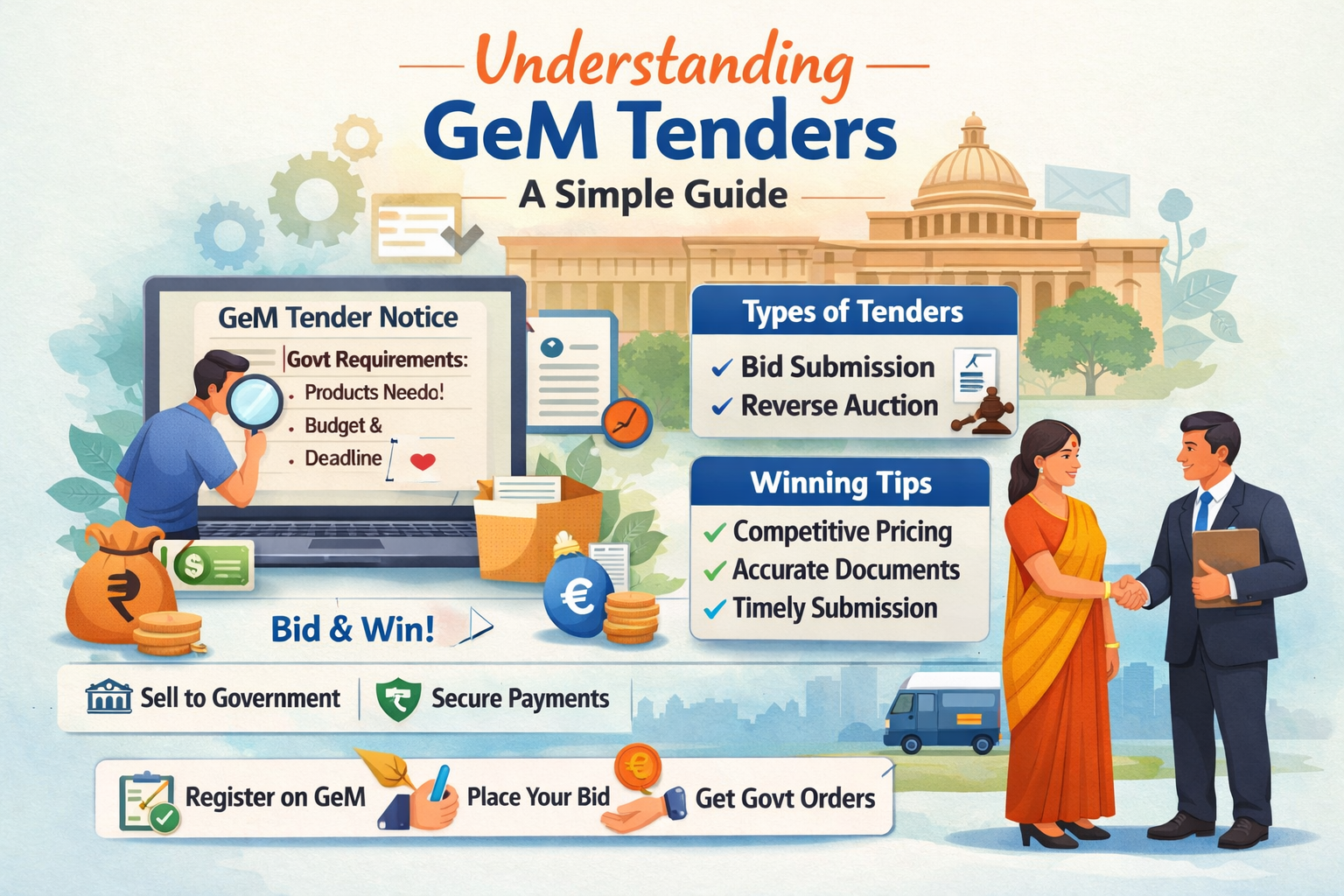
The Government e-Marketplace (GeM) is an online platform where government departments buy products and services from registered sellers. One important part of GeM is tenders. Many small businesses feel confused when they hear the word “tender,” but it is actually simple to understand.
A GeM tender is a request from a government buyer who needs specific products or services. The buyer shares all details like product type, quantity, quality standards, delivery time, and budget. Sellers who are registered on GeM can apply for the tender by submitting their offer. This process is called bidding.
When a government department needs bulk items or special services, they publish a tender on the GeM portal. Sellers can search for tenders in their category and apply if they meet the requirements. Each tender has clear instructions. It also has a last date for submission. Sellers must carefully read all details before applying.
Why Are GeM Tenders Important?
GeM tenders give businesses a big opportunity to sell directly to government buyers. This means:
-
Large and bulk orders
-
Secure and transparent process
-
On-time payment system
-
Equal opportunity for small and medium businesses
For many small businesses, winning a GeM tender can help increase sales and build a strong reputation.
Types of GeM Tenders
On the GeM portal, there are mainly two types of bidding methods:
-
Bids – Buyers invite sellers to submit price offers.
-
Reverse Auction – Sellers compete by offering the lowest price within a fixed time.
In most cases, the seller with the lowest price (L1) who meets all requirements wins the tender.
How to Participate in a GeM Tender?
Here is a simple step-by-step process:
-
Register your business on the GeM portal.
-
Complete your profile and upload your products or services.
-
Search for relevant tenders in your category.
-
Read the tender document carefully.
-
Submit your price and required documents before the deadline.
-
Wait for evaluation by the buyer.
Always make sure your documents are correct and your pricing is competitive.
Tips to Increase Your Chances of Winning
-
Keep your product details clear and accurate.
-
Offer a reasonable and competitive price.
-
Maintain good seller ratings and service quality.
-
Respond quickly to buyer queries.
-
Check new tenders regularly.
Common Mistakes to Avoid
Many sellers lose tenders because they:
-
Do not read the tender requirements properly.
-
Miss the submission deadline.
-
Upload incorrect or incomplete documents.
-
Quote unrealistic prices.
Avoiding these mistakes can greatly improve your success rate.
Final Thoughts
Understanding GeM tenders is not difficult. It is simply a process where government buyers request products or services, and sellers compete to provide the best offer. With proper preparation, correct documents, and smart pricing, even small businesses can win government contracts through GeM.